
Water for Peace Research
TWCEU Project
Transboundary water cooperation between EU member States and third countries: governance resilience analysis and hydropolitical model-building
Funded by SNSF
Europe has a long history of cooperation in transboundary water management, supported by regional frameworks, legal instruments, and basin-level institutions. Today, accelerating hydroclimatic change, evolving water uses, and growing socio-economic pressures are testing the resilience of these cooperative arrangements.
This project examines how existing governance systems across Europe’s shared river basins are equipped to address future hydrological uncertainty. It adopts a constructive perspective, analysing how mature cooperation frameworks adapt to new environmental realities and where targeted policy responses can strengthen prevention, coordination, and risk management.

© Tomas Marek, Panorama of Wachau valley (Unesco world heritage site) with ship on Danube river against Duernstein village in Lower Austria, Austria.
Focusing on four iconic European river basins – the Rhône, Rhine, Po, and the Danube – the research explores cooperation patterns between EU and non-EU countries across different legal, institutional, and hydrological contexts, and their resilience in light of climate change, emerging pollutants, and changing water use patterns.
Objectives
The project aims to:
assess hydrological and hydroclimatic risks in selected transboundary sub-basins.
map cooperation networks between EU and non-EU riparian actors.
analyse legal and institutional frameworks governing cooperation.
evaluate the effectiveness of existing governance arrangements.
develop policy-relevant recommendations for risk management and conflict prevention.
Approach
Using an interdisciplinary methodology, the project combines hydrology, engineering, and modelling with political science, international law, and international relations. Hydrological analysis, led by partner universities in Croatia and Hungary, is integrated with comparative governance and legal research, including experience from Central and Eastern Europe. This interdisciplinary approach links physical water dynamics with governance performance and supports forward-looking analysis of cooperation risks and opportunities.
Expected contribution
The project strengthens understanding of how transboundary water cooperation can remain effective under changing environmental conditions. Its findings will support evidence-based policymaking and reinforce water governance as a stabilizing factor in Europe’s shared river basins.
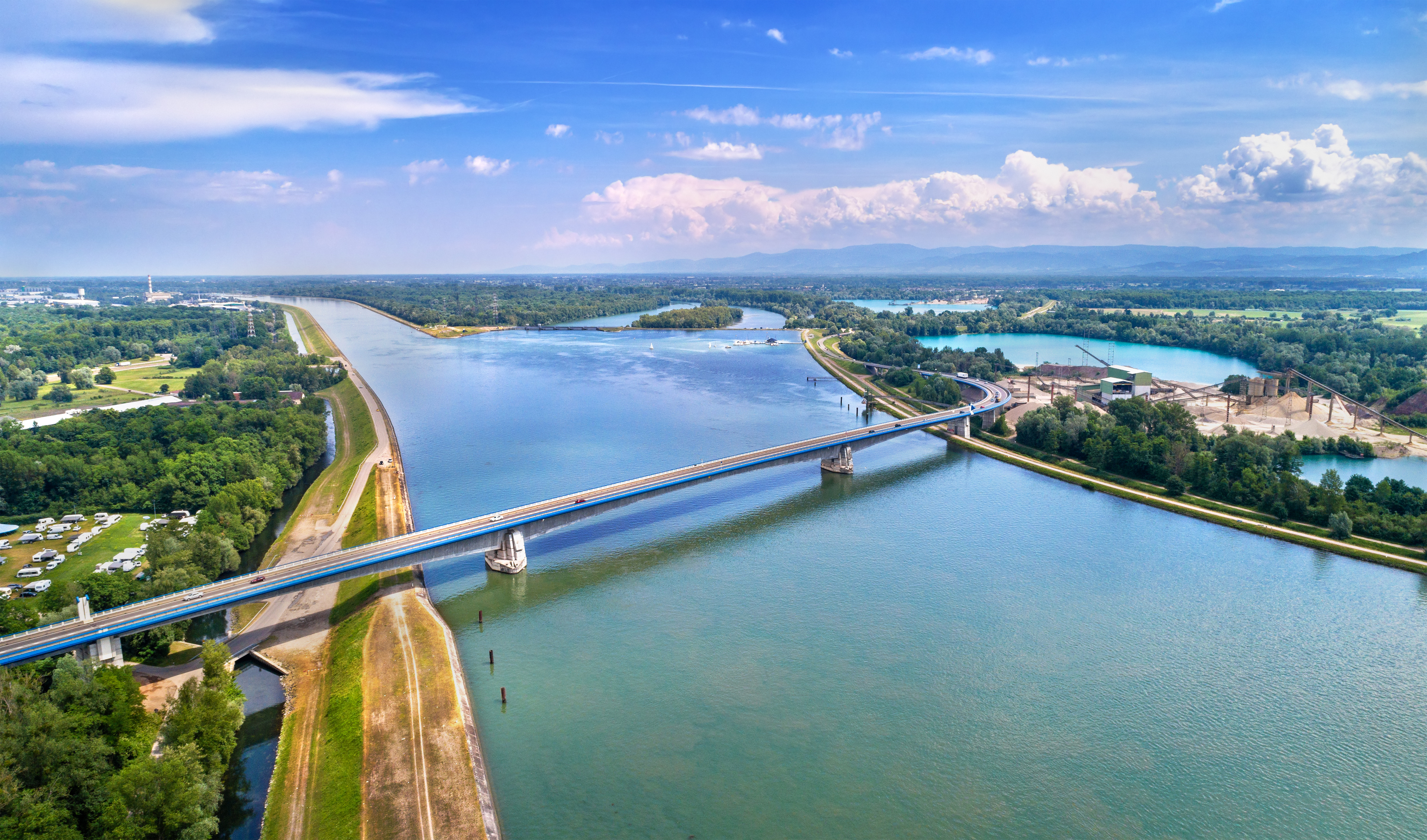
© Leonid Andronov, Pierre Pflimlin motorway bridge over the Rhine between France and Germany
Link to SNF/MAPS Project official page: https://www.snf.ch/en/0J84YIJ4f5K9LaQl/funding/maps-multilateral-academic-projects
Upcoming events
- Aida World Congress from 24-26 June 2026 in Oslo, Norway
- Conference on Environmental Peacebuilding at the University of Ottawa from June 16 to June 19 2026