
Geneva Water Hub's 6 Step Framework for assessing & developing climate resilient water arrangements can be adapted for different scales and priorities
Discover the CRESWAS Concept Note & Framework
How can transboundary water governance become more climate-resilient — and contribute to peace? The Geneva Water Hub's Climate Resilient Water Arrangements (CRESWAS) framework offers an answer.
Through a six-step methodology — spanning biophysical baseline assessment, power mapping, legal analysis, critical discourse analysis, and equity assessment — CRESWAS provides a comprehensive approach to understanding and strengthening transboundary water governance in the face of climate volatility.
The framework diagram below illustrates how water-climate-security risk pathways interact with transboundary governance cycles to build climate resilience, bridging vulnerability analysis with actionable cooperation strategies.
Download below the full Concept Note to explore the framework's conceptual foundations, methodology, and the Geneva Water Hub's complementary actions in research, partnerships, and policy advocacy.
CRESWAS Concep Note (short version)
View the CRESWAS Framework Diagram for a visual overview of how climate risks, peace and security dynamics, and governance arrangements connect within the framework.
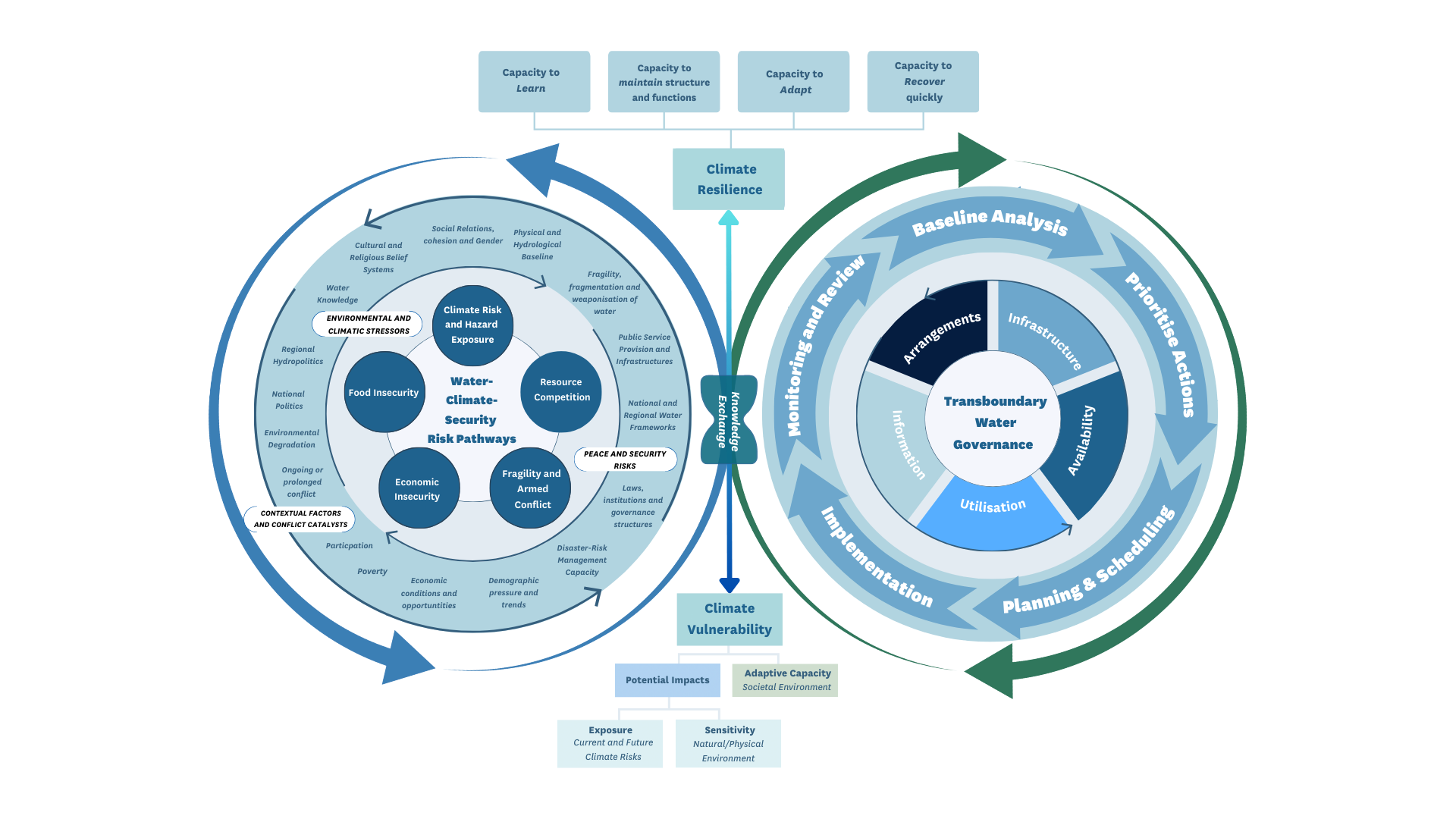
Grounded in critical hydropolitics and the GWH's "Water for Peace" perspective, CRESWAS seeks to identify new pathways towards transformative resilience — even in the most fragile of contexts.