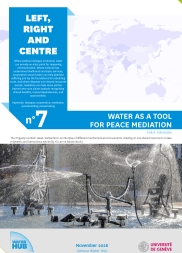

Left, right and centre – Policy note n°7 – Water as a Tool for Peace Mediation
Given the complexity of the water–conflict nexus, and considering its essential role for human security and prospects for peace, a nuanced understanding of the role of water in and around conflict is crucial. This requires looking beyond water as merely a driver or victim of conflict to consider its potential as a tool for managing, and even transforming, disputes. The significance of water for international peace and security has also been recognised at the United Nations Security Council.
Mediation, which is one branch of alternative dispute resolution (ADR), has attracted increasing scholarly and policy attention as a means of preventing, managing, and resolving disputes over shared water resources. Interest-based negotiation and mediation can help parties move beyond fixed positions to explore their underlying interests and identify a broader range of
mutually acceptable solutions.
Access the full brief below.
Dive into the full analysis by downloading the document below.