
Du risque à la ressource : comment l'eau devient un outil au service de la paix
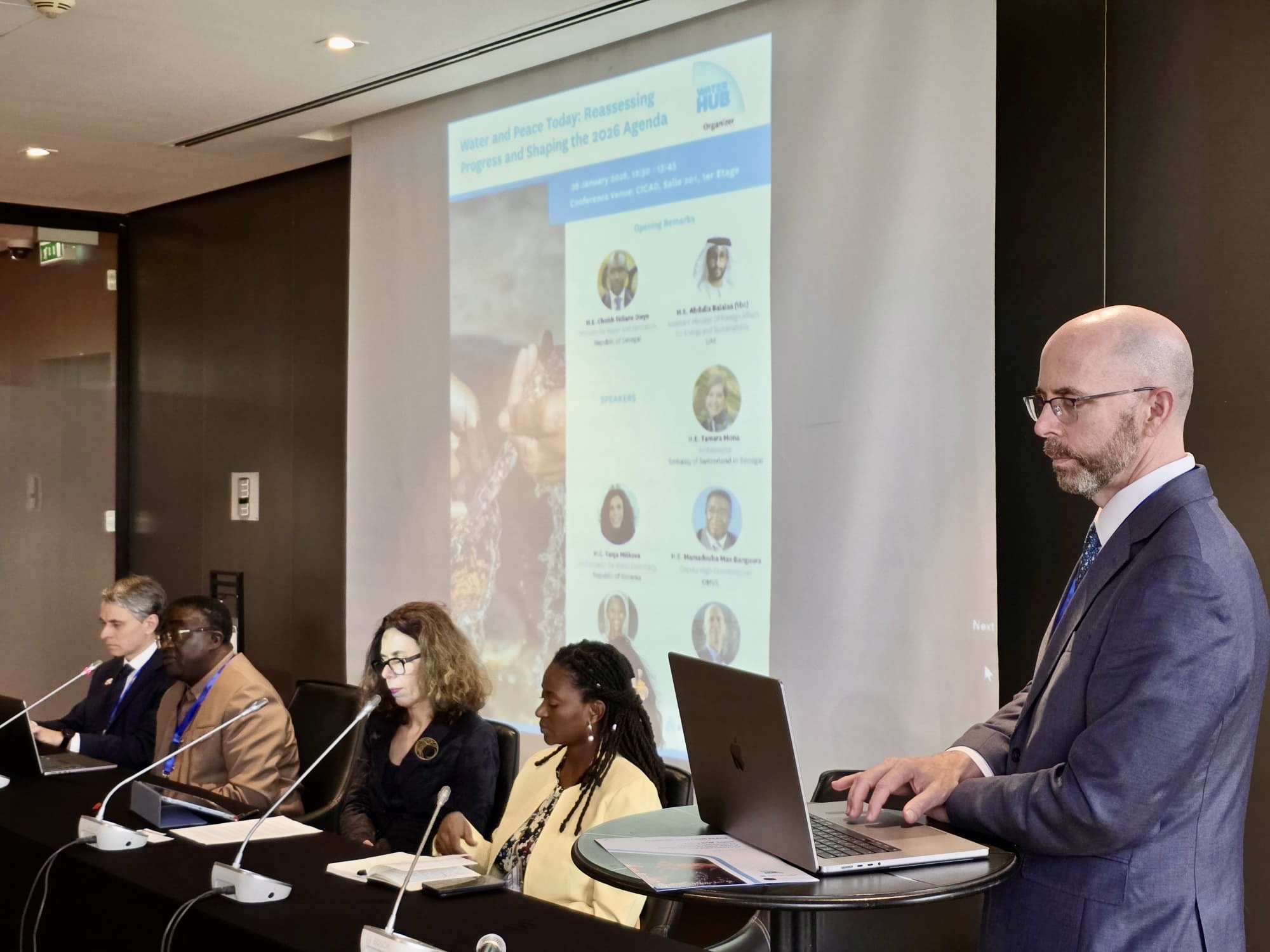
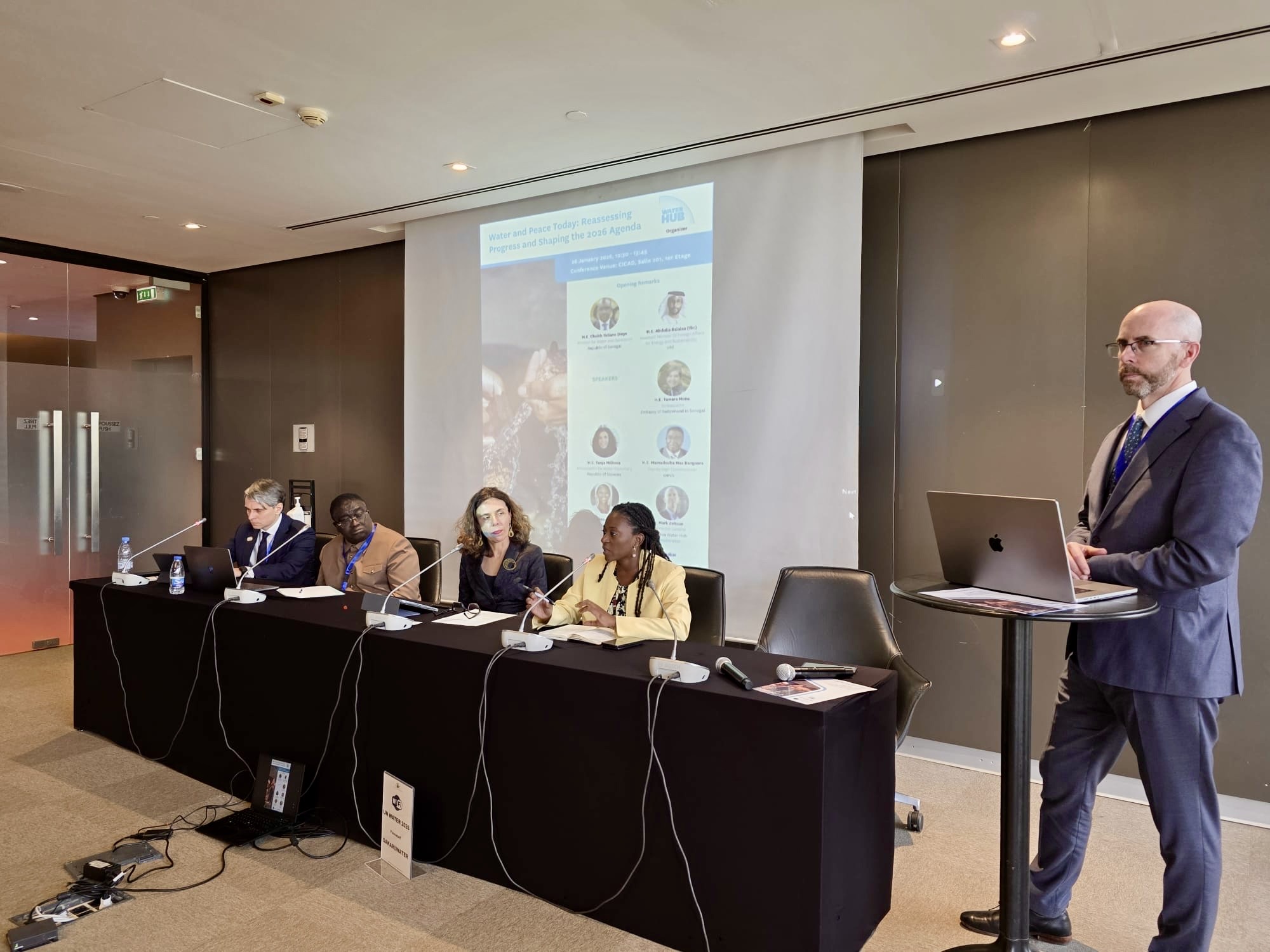
Lors de la réunion préparatoire de haut niveau pour la Conférence des Nations Unies sur l'eau de 2026 à Dakar, le Geneva Water Hub a organisé un événement parallèle de haut niveau sur le thème « L'eau et la paix aujourd'hui : réévaluer les progrès et définir l'agenda 2026 », réunissant des acteurs politiques, diplomatiques et des experts de terrain autour d'un changement clair : l'eau n'est pas seulement un facteur de risque, c'est un atout stratégique pour la coopération et la paix.
L'événement a bénéficié des contributions de S.E. Tanja Miškova (République de Slovénie), Dmitry Mariyasin (CEE-ONU), Tanya Merceron (UNOWAS) et S.E. Mamadouba Max Bangoura (OMVS), et a été modéré par Mark Zeitoun.
Plusieurs messages clés ont émergé des échanges :
- S.E. Tamara Mona-Münger, ambassadrice de Suisse au Sénégal.
- S.E. Tanja Miškova a montré comment la coopération dans le domaine de l'eau a contribué à rétablir la confiance dans les Balkans occidentaux et a mis en avant l'Alliance mondiale pour la protection de l'eau contre les conflits armés (lancée conjointement par la Slovénie, la Suisse et le Geneva Water Hub) afin de mieux protéger l'eau dans les conflits armés.
- Dmitry Mariyasin a souligné que la Convention des Nations Unies sur l'eau constituait un outil multilatéral concret pour instaurer et maintenir la confiance et la coopération dans les bassins transfrontaliers. Elle compte aujourd'hui 58 parties et continue de s'étendre.
- Tanya Merceron a présenté les réalités du terrain en Afrique de l'Ouest, où la pénurie d'eau alimente les tensions mais peut également renforcer la cohésion sociale, avec des répercussions importantes sur les femmes et les communautés.
- S.E. Mamadouba Max Bangoura a présenté l'OMVS comme un modèle vivant de diplomatie préventive dans le domaine de l'eau, fondé sur des infrastructures partagées, des réflexions sur le partage des bénéfices et une coopération politique à long terme.
Dans sa synthèse, Mark Zeitoun a rappelé que la communauté internationale dispose déjà des cadres juridiques, des outils politiques et des alliances nécessaires pour faire progresser l'eau au service de la paix. Le défi central consiste désormais à combler le fossé entre les normes et leur mise en œuvre, et à développer les approches qui ont déjà fait leurs preuves.
Concrètement, la discussion a mis en évidence quatre priorités : renforcer le recours à la coopération dans le domaine de l'eau comme outil de diplomatie préventive ; améliorer la protection des systèmes hydriques dans les situations de conflit ; renforcer la cohérence entre le droit, les politiques et les actions sur le terrain ; et apporter des contributions claires et opérationnelles au processus politique menant à la Conférence des Nations unies sur l'eau de 2026.
Des données probantes à la politique, et de la politique à l'action, c'est là que le Geneva Water Hub positionne son travail : aider à faire de l'eau un moteur de coopération, de stabilité et de paix, en partenariat avec le Pôle Eau Dakar et TRENDS Research & Advisory.